Real Estate Link in Bio: A Better Page for Agents
A real estate link in bio should do one job well: help a potential buyer, seller, landlord, tenant or referral partner choose the next useful step without hunting through your profile.
That sounds simple, but many agent pages become a pile of destinations—homepage, listings portal, WhatsApp, valuation form, mortgage calculator, neighborhood guide, testimonials and every social network. The visitor sees options but no route.
A stronger page acts like a small decision hub. It identifies who you are, makes one primary action obvious, and keeps the most common real-estate journeys within one or two taps. This article focuses on that page structure rather than the wording of your Instagram profile itself. If you are working on the profile copy, start with our Instagram bio ideas for real estate agents .
Start with visitor intent, not your company menu
Most people arriving from an agent's social profile are not trying to explore an entire corporate website. They usually have a narrower question:
- What properties are available now?
- Can I ask this agent about selling my home?
- Does this agent work in my area?
- How do I contact them?
- Can I see proof of recent work or local expertise?
Your bio page should reflect those intents in roughly that order of importance for your business.
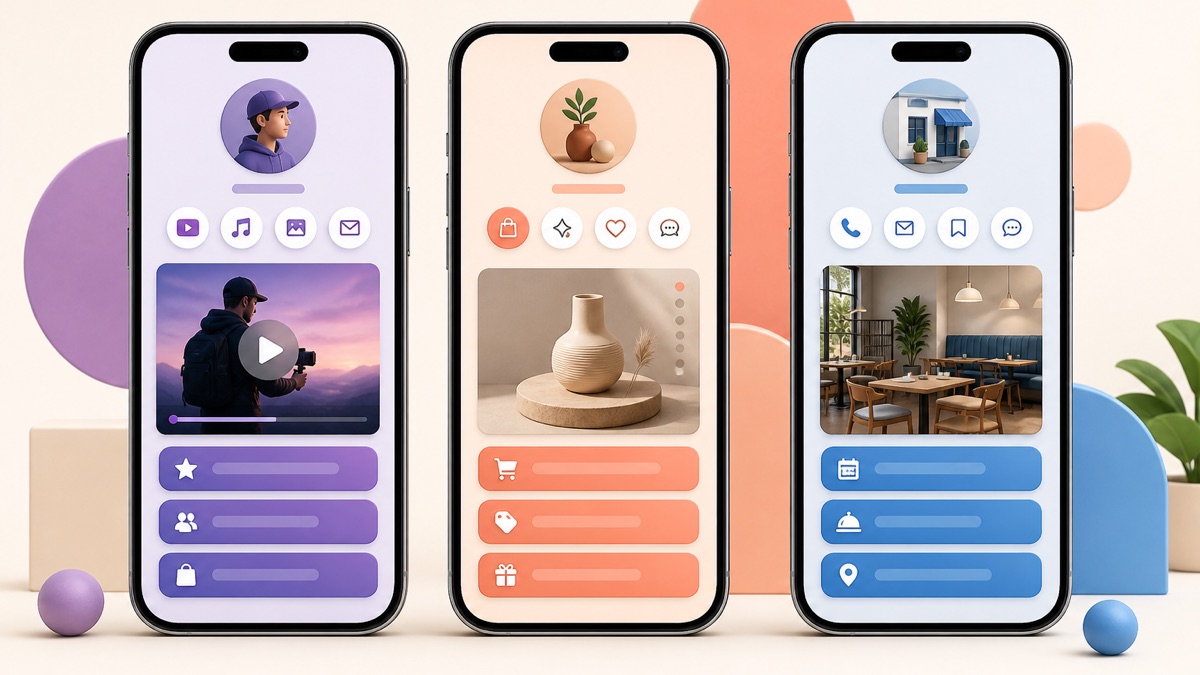
A buyer-focused agent might lead with View current listings . A seller-focused agent may lead with Request a home valuation . A new-development specialist might lead with See available projects . The point is not that one label is universally correct. The point is that the first action should match the audience you most want to serve.
This is also why a dedicated page can still be useful even when a social platform supports more than one profile link. Multiple raw links expose destinations; a structured page can explain priority and context.
Use a simple five-part real estate page
For most agents, a practical page can be built from five blocks.
1. Identity and service area
Use a recognizable headshot or team logo, your professional name, and one short line that establishes your market. For example: "Residential property in Austin and surrounding communities."
Avoid turning the intro into a full biography. A visitor who wants credentials or a company history can reach those later.
2. One primary action
Give the most important action the first full-width button and use descriptive language. The W3C's guidance on link purpose explains the value of link text that tells people what a destination does. The same principle improves a bio page for everyone.
"View Austin homes for sale" is clearer than "Click here."
"Request a seller consultation" is clearer than "Learn more."
3. Two or three supporting routes
Useful secondary destinations often include:
- a seller valuation or consultation;
- a buyer guide or neighborhood guide;
- a recent sales, testimonial or case-study page;
- a direct contact route.
Do not automatically make every service a separate button. If two links serve the same intent, choose the stronger destination.
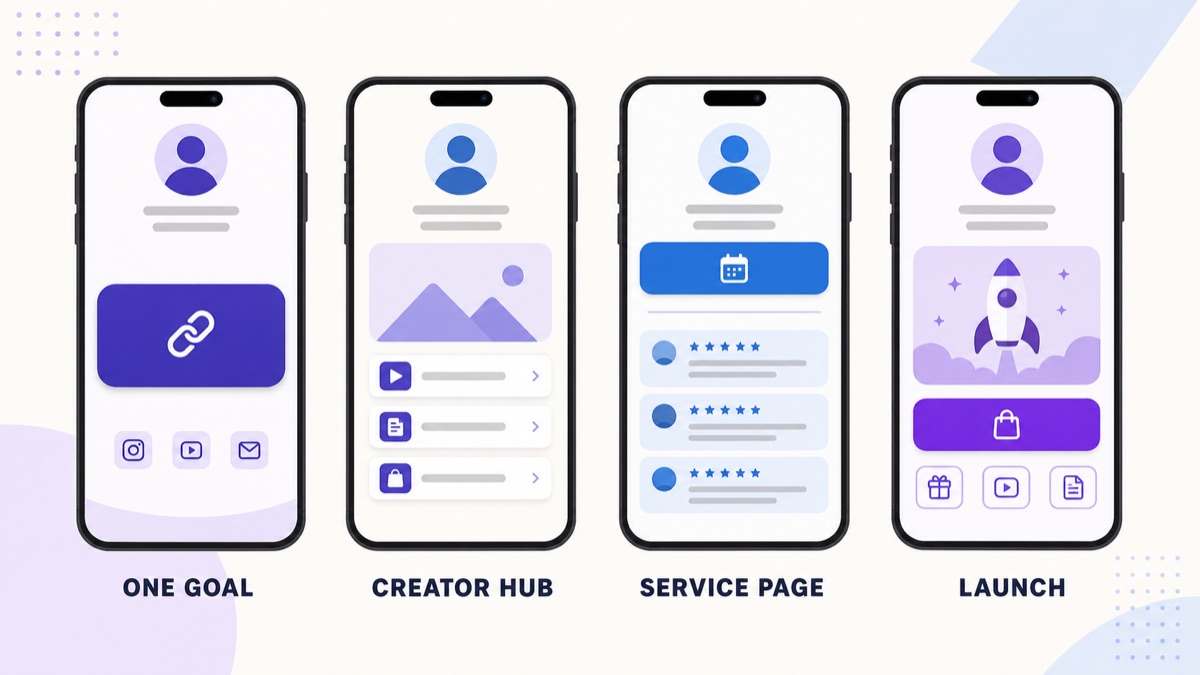
Our guide to link in bio layouts explains the difference between a service-business layout and other page structures. Real estate normally fits the service pattern: identify the offer, provide the next action, add proof, then keep secondary navigation below it.
4. Listing cards where they add context
A property link is more useful when a visitor can recognize what it represents before tapping. Belink includes a real-estate-oriented link type designed to present listing information in a more meaningful card rather than forcing every property into a generic button.
Use listing cards selectively. A page with 20 active properties may be better served by a main search/listings destination plus one or two featured homes. Otherwise the bio page becomes another property portal that you have to maintain.
5. Compact contact and social links
Phone, email, WhatsApp or another approved contact route can sit below the primary conversion choices. Social icons are useful for channels visitors already understand, but they should not compete visually with the actions that generate enquiries.
If someone has already reached your Instagram bio page, another large "Instagram" button rarely deserves prime space.
Put links in the order a client would make decisions
The easiest way to organize the page is to imagine a first-time prospect reading it from top to bottom.
A seller might need:
- confirmation that you serve their area;
- a clear valuation or consultation action;
- evidence that you understand the market;
- a low-friction way to contact you.
A buyer may need:
- current listings;
- a useful buyer or neighborhood resource;
- a way to ask about a property;
- your contact details.
The sequence matters more than the number of links.
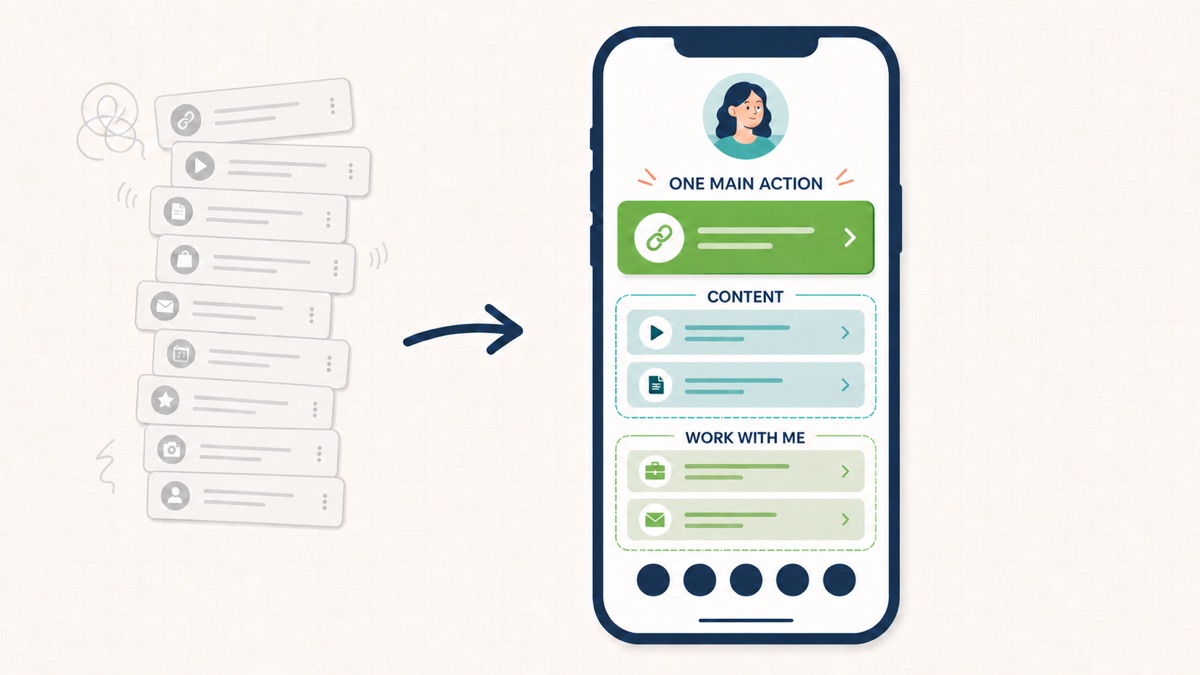
If your current page has grown over time, use our step-by-step method for organizing bio links . Remove expired campaigns, duplicated destinations and vague buttons before adding anything new.
Make the page useful beyond Instagram
A good real estate bio page can be reused anywhere a short profile link is useful: TikTok, YouTube, LinkedIn, email signatures, QR codes on printed materials, event profiles or a digital business card.
That does not mean every traffic source needs the same emphasis forever. During a new development launch, the featured project may temporarily become the primary action. During a seller campaign, the valuation route can move to the top.
Keep one stable page address and update the hierarchy behind it. That lets marketing materials remain usable while the page reflects your current priority.
Avoid four common mistakes
Too many property links. A long inventory pushes the important client paths out of view. Feature selectively and send serious searchers to the maintained listings destination.
Generic button labels. "Website," "More" and "Info" make the visitor guess. Describe the outcome instead.
Duplicating the website navigation. Your company website may need About, Careers, News, Services and Legal pages. Your bio page usually does not.
Leaving expired links live. Old open houses, sold listings used as active CTAs, and completed events reduce trust. Archive or replace them promptly.
A quick real estate link-in-bio checklist
Before publishing, check the page on a phone and ask:
- Can a visitor tell who I am and where I work within a few seconds?
- Is the primary buyer or seller action obvious?
- Do button labels explain what happens after the tap?
- Are listing links current?
- Is there one easy contact route?
- Have I removed duplicate social and website links?
- Does every link open the intended public page while signed out?
- Would the page still make sense to someone who arrived from somewhere other than Instagram?
The best real estate link in bio is not the one with the most links. It is the one that reduces the distance between a profile visit and a useful next step.
Belink can combine standard links, social icons, location links and real-estate listing cards in one mobile-first page. Start with the visitor journey, give the most valuable action the strongest position, and treat everything else as supporting navigation.